PDI
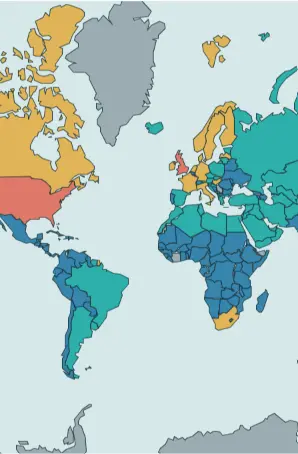
Power distance
- Higher
- More acceptance of hierarchy and unequal power distribution. Malaysia, Slovakia, Russia.
- Lower
- Stronger preference for equality and questioning authority. Denmark, Israel, Austria.
Hofstede cultural dimensions
A compact guide to reading cultural differences through data, with enough context to use the model carefully in study, research, and discussion.

Understanding cultural differences
This interactive tool draws on the work of Geert Hofstede, Gert Jan Hofstede, and Michael Minkov. It helps students, researchers, and curious minds explore broad national cultural tendencies that can shape everything from workplace expectations to family relationships.
The model positions countries on six spectra. It is useful for spotting patterns, framing questions, and comparing contexts. It does not describe every person, community, or situation within a country.
The six cultural dimensions
Country scores show a relative tendency, not a fixed rule. Read the high and low ends together.
PDI
IDV
MAS
UAI
LTO
IVR
Study and research
Compare first, then bring history, context, and within-country diversity back into view.
What the research invites us to notice
Culture is learned. Families, schools, and communities pass social values between generations.
Culture supplies unwritten rules. It can shape how people relate to authority, emotion, conflict, and cooperation.
Practices and values move at different speeds. Visible customs can change quickly while underlying patterns may shift more slowly.
Difference is not a ranking. The model describes different responses to shared human challenges, not better or worse cultures.
Understanding supports cooperation. Cultural awareness can improve how people approach global and local problems together.
Important caveats
The strongest use of the framework is precise and humble: use it to guide inquiry, then investigate the people and context in front of you.
Read estimates carefully: Some countries may be represented by regional estimates rather than direct measurements. These values are useful approximations, not precise measurements.
Expect internal diversity: No six dimensions can capture the full complexity of a country, especially where local histories and social change are central to the question.
Frequently asked questions
The scores come from decades of cross-cultural research. They are best treated as established comparative indicators that remain open to critique, re-evaluation, and careful interpretation.
Yes. Practices may move rapidly, while underlying values often change more gradually. Scores should be read as relative positions from the research, not permanent facts.
No. The dimensions describe national averages and tendencies. Every country contains wide individual, regional, ethnic, and class variation.
PDI, IDV, MAS, and UAI began with IBM research. LTO drew on the Chinese Value Survey and World Values Survey, while IVR was developed using World Values Survey data.
For countries not directly represented in the underlying studies, a regional estimate can provide a cautious starting point based on cultural similarities. It is not a substitute for direct measurement.
Yes. Cite the primary source and state how you used the data. The recommended book citation appears below.
Researchers have examined relationships between the dimensions and social, economic, institutional, and wellbeing indicators. Treat correlation as a prompt for further investigation, not proof of causation.
Further reading
For academic work, return to the original publications and explain how this tool informed your analysis.
Built for learning. ClassWrites Lab turns published theory into visual study spaces that encourage accuracy, transparency, curiosity, and cultural understanding.
Return to Hofstede Lab